Singapore hits the gas pedal
Next year Singapore will become a forerunner in the uptake of liquefied natural gas (LNG) bunkering at Asian ports. In the run up to that launch, the country’s government has been emphasising the importance that gas will play not just in shipping, but in its total energy mix.
“The advantages offered by natural gas, such as its environmental advantages and relative abundance compared to other fossil fuels, are expected to help it make up for 30% of the global energy mix by 2035,” observed the nation’s Trade and Industry and National Development Minister Koh Poh Koon at the launch of the Inaugural Gas Roundtable at International Enterprise Singapore, in remarks clearly meant for the international community and the nation’s many interested stakeholders.
The global push for clean air and emission reducing gases has undoubtedly made Singapore sit up and take notice of LNG. But for a port that has dominated sales of bunker fuel in Asia over the last few decades, the need to remain at the forefront of global demand is an important driver. The country no doubt hopes that the availability of gas bunkering will become a cue for Singapore to serve the global community of LNG-fuelled vessels as demand for gas increases.
Earlier this year Singapore’s Maritime Port Authority (MPA) tendered two licences for LNG bunkering, awarded to Pavilion Gas and a joint venture between Keppel Offshore & Marine and BG Group (which was subsequently acquired by Shell). “Getting the licence complements what we are doing,” declared Michael Chia managing director of Keppel Offshore & Marine Technology Centre, referring to the group’s business in the development of LNG vessels and technology.
Meanwhile Pavilion Energy has taken ExxonMobil as a partner to assist it in establishing LNG bunkering procedures, starting with truck to ship deliveries. The oil and gas major will also provide support in developing safety and operational standards for LNG bunkering in Singapore, in close step with MPA’s own work in these areas.
More licences
Although there are just two bunkering licences for now, the game plan is to eventually award many more, according to a senior source at MPA. But the licences are just the beginning, and MPA is also investing heavily in ensuring that it has the infrastructure and operational frameworks in place to support gas bunkering. Singapore’s LNG terminal, which has been operating since 2013, is to be expanded to accommodate a projected increase in sales volumes. The country predicts trade to grow from the current six million tonnes to 11 million tonnes in 2017.
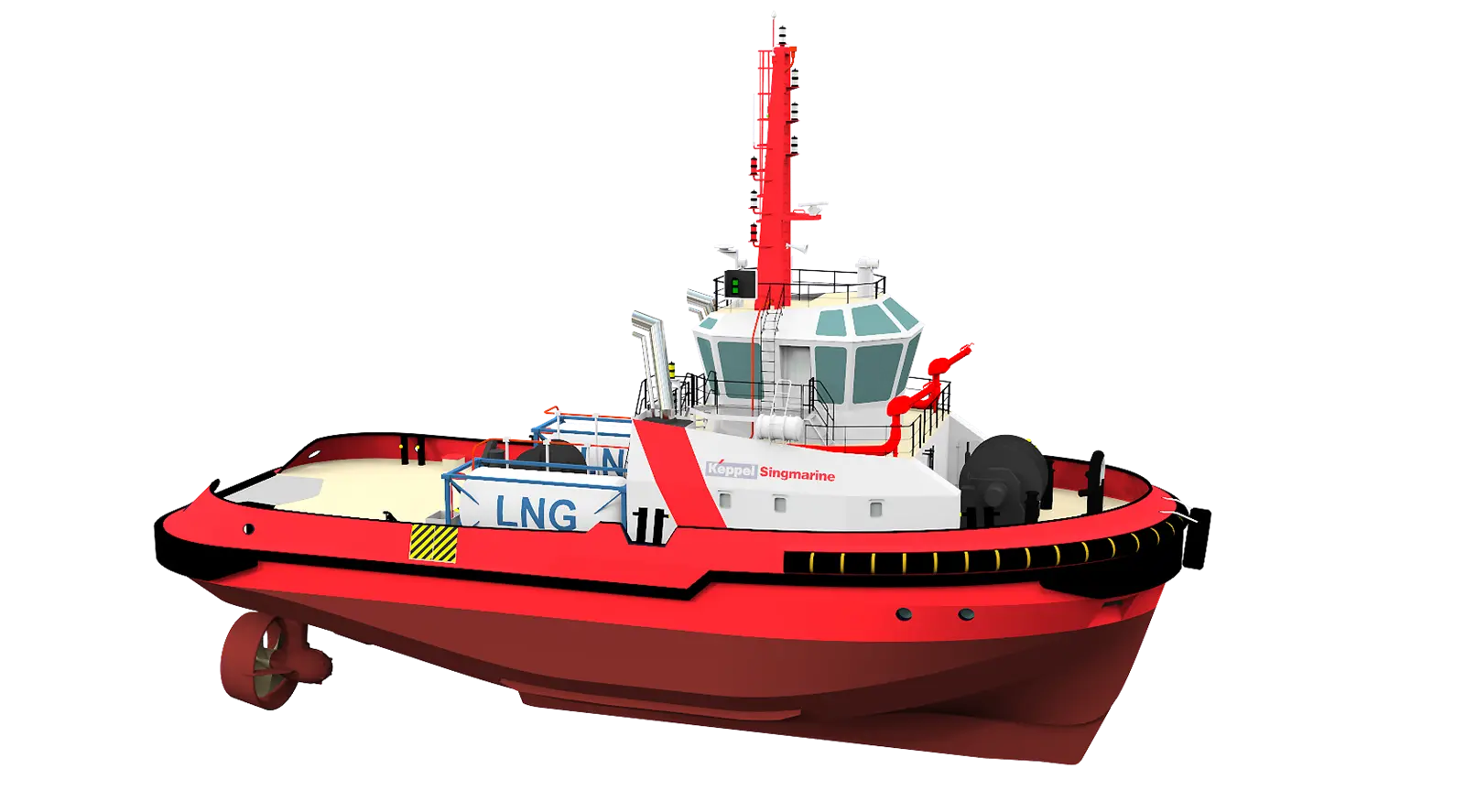
The MPA, says Singapore’s Senior Minister of Transport Ng Chee Meng, is also on track to develop a truck loading facility for LNG bunkering. Singapore will also be commissioning LNG bunkering barges over the next few months. Meanwhile a fund of S$2million (US$1.4million) has been set aside to encourage harbour vessels to switch to LNG fuel, over and above a disbursement of S$8 million (US$5.8million) to Keppel Smit Towage, Maju Maritime and Harley Marine Asia to co-fund the construction of their new LNG-fuelled harbour tugs.
The implementation of a technical reference framework for Singapore’s LNG bunkering standards is planned in early 2017, according to Ng. That will provide a reliable and transparent guidepost for LNG bunkering operations and guarantee safety of operations.
Parry Oei, director port services and chief hydrographer, MPA, elaborates: “It is for this reason that Singapore will continue to work with Antwerp, Jacksonville, Japan, Korea, Norway, Rotterdam and Zeebrugge – through memorandum of understanding – to build a network of ‘LNG bunker ready’ ports across the Asia-Europe and Transpacific trade routes.
“The set of harmonised LNG bunkering standards developed will also be a guide to other ports which are seeking to be LNG bunker ready, enabling them to learn from operational experiences gained in Singapore as well as our international partners. We will continue to refine the standards and collectively ensure that LNG bunkering operations are carried out safely.”
Amid the excitement caused by a new direction in a new century, Singapore is also building on the lessons from its long-established bunker market. For years, to Singapore’s chagrin, the city-state has been hit by occasional allegations of bunker suppliers feeding adulterated bunker fuel. All that will change now with technology’s help. The city-state will bank on electronic bunker delivery notes, or e-BDN, slated for 2018 as a means for immediate information transmission between suppliers and customers. Complementing the e-BDN is the Mass Flow Meter (MFM) initiative which, when it begins officially in January 2017, will provide assurance to both suppliers and customers on the quantity of the bunker that is to be delivered.
National ambitions
The push – along with recently introduced port incentives for vessels using LNG – will largely determine to what extent Singapore can reinvent itself as the premier maritime and LNG shipping hub, no doubt aiming for the top billing it once basked in as the world’s leading bunker port. But the moves belie a larger, overarching national campaign.
The LNG phenomenon is new to Singapore’s citizenry. Its clean properties, rising importance and indeed popularity are revolutionary. But what is making all the difference is that the commodity lies close to the the spirit of undertakings the city-state has forged in numerous environmental accords with the international community over the years. Inferentially, what that means for Singapore is that an investment in LNG resources is actually an investment in the nation’s future; and that could only mean more endeavours, more measures and more initiatives over the next few years.
The timing of Singapore’s moves towards LNG could not be more opportune. Although Singapore is surrounded by gas-producing countries from Malaysia to Indonesia, Brunei and further afield in Myanmar and Sri Lanka, none of these nations have taken to retailing LNG bunkering in the way that Singapore now plans. The island-republic therefore has an edge and that strategic overlay was cue enough for Koh to exhort companies “in traditional oil and gas services as well as engineering businesses to consider diversification and building their capabilities to harness long-term opportunities”.
While the headlong push for LNG is ambitious, it is also considered. Singapore fully understands the conditions needed for a fully developed and matured market in Asia. It is reading the signs from Europe, where gas supplies are entrenched against disruptions through piped and shipped gas, regasification terminals, liquefaction plants and bunkering ports. Such infrastructure development is key for a LNG derivatives market to insulate buyers and sellers from market volatility and soften the blows arising out of violent price fluctuations.
Such conditions will take time to emerge in Singapore. Even so, with a well-structured plan for the introduction of LNG bunkering in place, there is little doubting where the city state is headed as it begins on a journey that will be watched closely by the international energy and shipping communities.