Svitzer’s EcoTow solution is part of its carbon neutrality target
Decarbonisation is now considered a top prioroty by 95% of shipping executives. The maritime industry is responsible for emitting 1,076 million tonnes of CO2e annually, approximately 2.89% of total global greenhouse gas emissions. Many organisations and governments around the world are now implementing green agendas in their fight to tackle climate change. The shipping industry in particular has been set a target by the International Maritime Organisation (IMO) to reduce the carbon intensity of all ships by 40% by 2030, when compared to the baseline of 2008 levels, and reach a 70% reduction by 2050.
The shipping industry has the difficult task of decarbonising its fleets and ensuring its businesses remain financially viable, all while continuing to carry 90% of world trade. With the global nature of the maritime industry, companies also face a fragmented regulatory landscape. For instance, the EU target for reducing carbon emissions contrasts with the IMO aims. The EU is targeting a reduction of at least 55% by 2030, requiring a 90% reduction in all transport emissions – including maritime. Different countries and regions with varying decarbonisation rules leave the maritime industry without clear guidance or a single set of rules to follow in its efforts to reduce carbon emissions.

This is exacerbated further in the towage sector. Total CO2e emissions from tugs were estimated to be around 41 million tonnes in 2018. While these figures are significant, they are dwarfed by the emissions of larger vessels, meaning towage is often overlooked by the IMO and other regulators who focus on the heavier emitters. It therefore falls on towage companies themselves to figure out how to decarbonise, set relevant targets and push an agenda for the wider industry to follow.
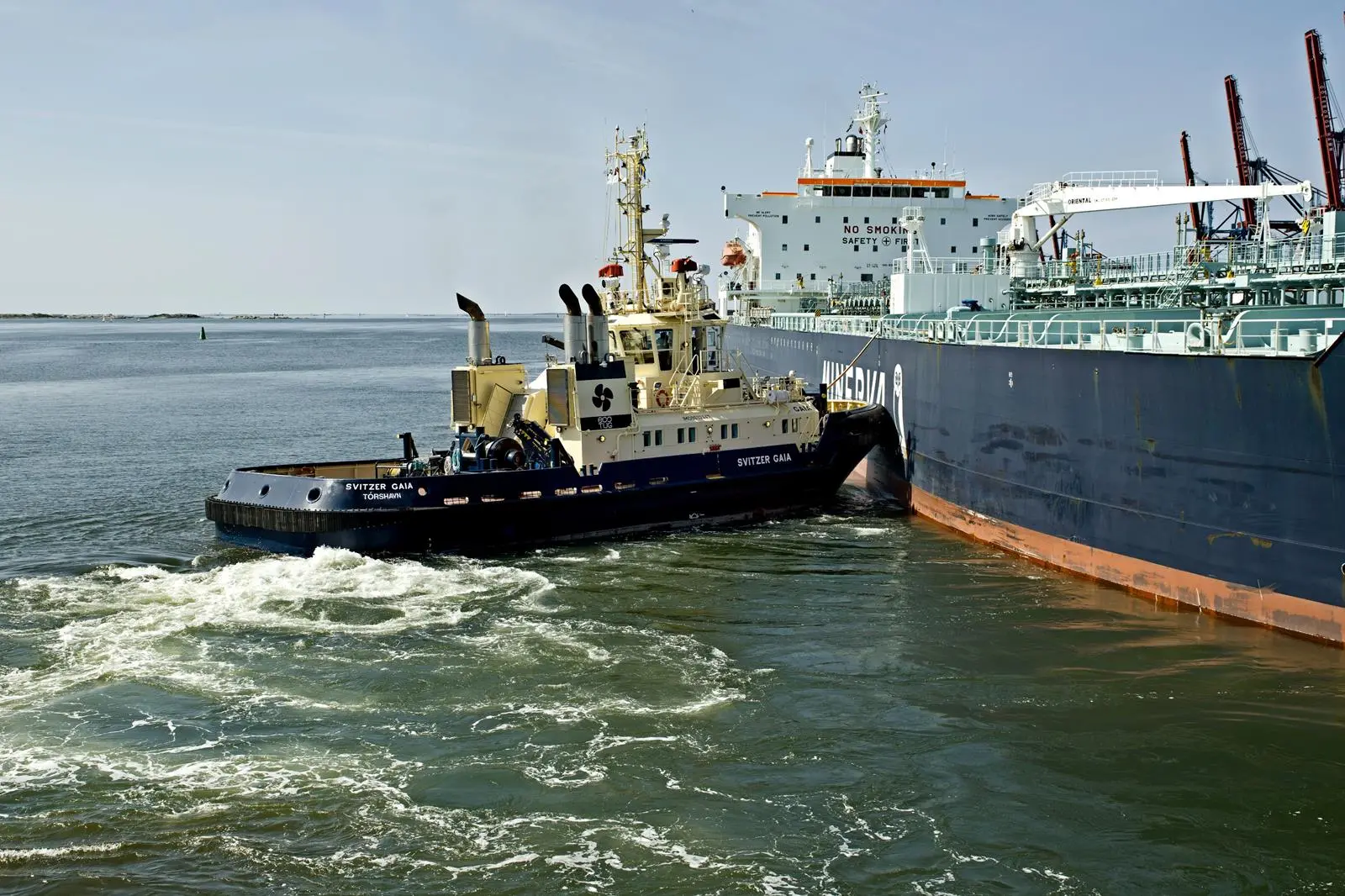
Svitzer recently announced a target to become fully carbon neutral by 2040 and reduce the CO2 intensity of our entire fleet by 50% by 2030. Our EcoTow solution is a key initiative to this end. The project began in 2021 and has now seen our entire fleets in London, Felixstowe and Southampton switch to low carbon biofuels. The success of EcoTow will be followed by a more widely scoped roll out across UK, European and global operations. EcoTow has confirmed for Svitzer and the wider towage sector that using biofuel to power tugs not only holds environmental value but is also operationally and commercially viable.
EcoTow gives Svitzer’s customers the opportunity to inset fossil-fuelled towage through our global network. We can calculate the emissions impact of a customer’s towage operations and match this impact with the volume of biofuel to be delivered to one of the biofuel-powered UK fleets. The example set by EcoTow not only charts a potential emissions reduction path for towage providers, but also shows how operators can use biofuels to help customers drive decarbonisation across their supply chains.
With ambitious decarbonisation targets and dwindling time remaining in which to reach them, the maritime industry is relying on innovators. Regulation will only take the industry so far, especially as rules and targets vary depending on where in the world they are operating. Consequently, the onus is ultimately on businesses to set ambitious targets and carve out their own decarbonisation path.
What is encouraging is that companies in the towage sector are demonstrating success when it comes to using biofuels and are scaling these solutions into their global operations. The lack of clear and cohesive regulatory pressure makes it very important for the towage sector to continue to set its own agenda for decarbonisation and deliver solutions that can help customers achieve their own emissions goals, while also ensuring they continue to receive the best possible towage services.