System shown not to impact on corrosion or coatings
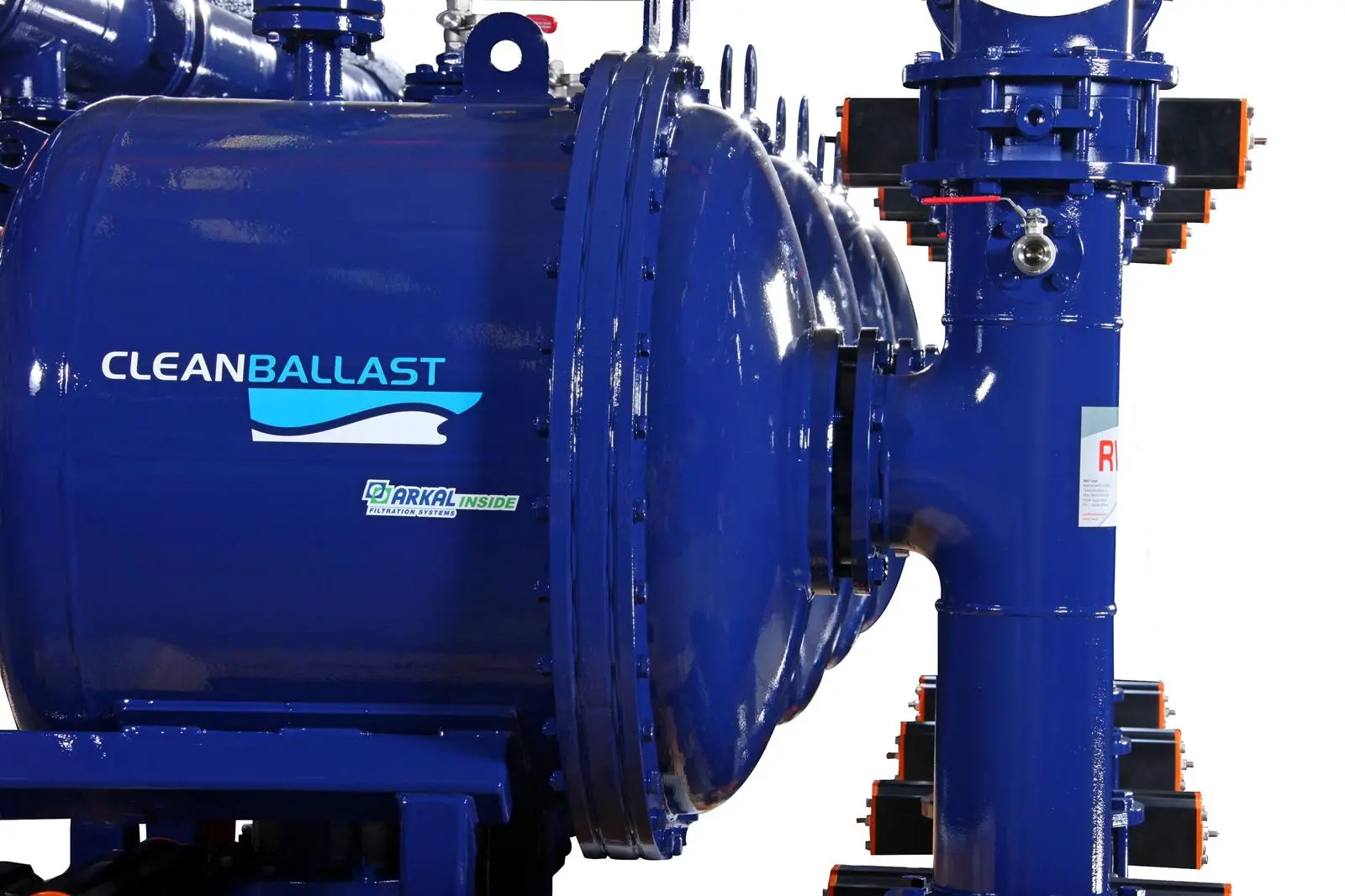
The tests, undertaken by two independent institutes, are said to prove that RWO’s CleanBallast system using the company’s EctoSys disinfection technology does not increase the corrosive properties of seawater ballast. Studies were undertaken by RWO in co-operation with European corrosion institute Swerea-Kimab and classification society Germanischer Lloyd. The investigations focused on accelerated corrosion in treated full-salinity seawater with the CleanBallast ballast water treatment system, simulating operation over an approximate 40 year period, said to represent the entire lifetime of a ballast water tank and piping structure.
RWO says that CleanBallast operates readily in waters with low and full salinity. The natural corrosiveness of those environments can vary significantly; full salinity (>32PSU) is a very corrosive medium to common construction materials. The company says it is well known that large quantities of active chlorine can have a further negative effect on corrosion, increasing the wear rate of non-passivated materials.
The EctoSys disinfection unit employs electro-chemical technology, but operates very differently from conventional chlorination or electrolysis systems using salt water (containing chloride), where a maximum production of active chlorine is desired. Instead, EctoSys is said to produces short-lived mixed oxidants, which together have a more powerful effect than chlorine. The CleanBallast system is therefore not dependent on chloride content (salinity), but produces oxidants directly from the water. This, says RWO, means that it effectively avoids the negative corrosive effects of active chlorine.
In natural brackish and full-salinity seawater, besides the short-lived oxidants hydroxyl radicals, the EctoSys unit is said to produce only low levels (up to maximum 2mg/l) of more persistent TROs (total residual oxidants). These agents, in higher concentrations, affect the corrosive properties of water. TROs will decay via interactions with, e.g., dissolved organic matter. Typically, the natural blank level of 0.2 – 0.3 mg/litre of TRO is reached within about two hours.
RWO’s co-operatedwith Swerea-Kimab and GL in thorough corrosion studies in treated full-salinity seawater, simulating an entire lifetime of a ballast water tank and piping structure. The company says that its studies later formed a recommended the IMO technical group Gesamp-BWWG, as part of guidance for vendors developing ballast water treatment studies, to be included in approval processes under MEPC 59/2/16, para 4.5.1.
The tests included accelerated comparative studies in treated and untreated seawater, using uncoated steel test specimens, and test specimens with two-coat paint systems to DNV standards for use in ballast water tanks, such as Jotun’s Balloxy HB light. The tests included parallel tests with continuous exposure to the water and intermittent cyclic exposure of water and air. Intermittent exposure is said to better resembles real ballast water tank conditions and is more corrosive than continuous exposure.
Test standards employed included SS-EN ISO 9227:2006 (salt spray 1440 h); SS-EN ISO 6270-1 (condense 1440 h); SS-EN ISO 2812-2 :2007 (immersion 3000 h); and EN ISO 15711:2004 (cathodic 3000 h)
Based on the test results, both institutes are said to have concluded that there are no additional corrosive properties of seawater treated with CleanBallast, compared to untreated seawater. Therefore, the CleanBallast system with EctoSys does not increase corrosion in ballast water tanks. CleanBallast has been certified by GL as compatible with epoxy-based ballast water tank coating systems.