Tanker emits no GHGs during port operations
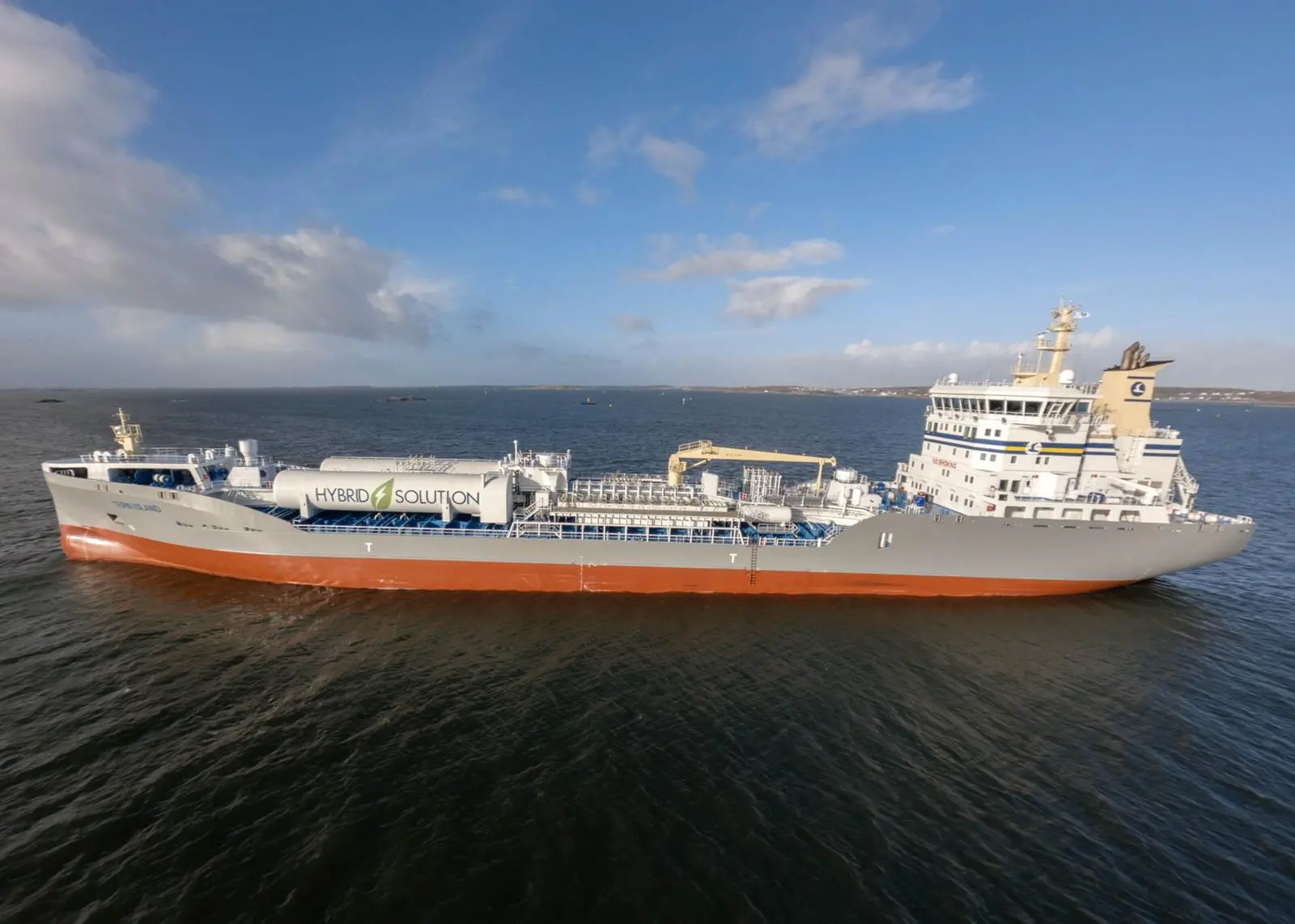
Owned by Swedish tanker operator Terntank, Tern Island is designed with Terntanks Hybrid Solution which features a Corvus battery pack, on-shore power supply and a DC-Link system which is reported to be able to reduce its auxiliary energy consumption during port operations by 99%. The Motorship featured the vessel design in August 2020.
The vessel features a five-cylinder, 500mm bore RT-flex50-D low pressure LNG dual-fuel main engine from WinGD that uses liquefied biogas or LNG which means that it is able to operate on completely fossil-free fuel. Tern Island’s main engine, boiler and auxiliary engine are also designed to run on biofuels. By combining the optimised hull and rudder design with dual fuel capability, when utilising 30% biogas, in comparison to a same sized conventional vessel, Tern Island reduces CO2 emissions by 70% and almost eliminates SOx, NOx and particulate emissions.
The battery packs provide peak shaving, an energy reserve for power generation, limit unnecessary parallel running of generators and provide a blackout prevention function that keeps the electrical network alive.
Tern Island has a cargo capacity of 16,500m3 in 14 epoxy coated tanks and will be commercially operated by the Finnish North European Oil Trade (NEOT) in the Baltic Sea area. It will be included in a pool along with other vessels from Terntank.
Designed by Terntank and Kongsberg Maritime CM AS and delivered in December 2021 at China Merchants Jinling Shipyard, Yangzhou, Dingheng, the vessel is the first of a series of two 15,000dwt chemical and product tankers in the Terntank Hybrid Solution series.
The vessel’s shore power connection has been developed together with the Port of Gothenburg which is believed to be the first port in the world that can connect tankers to electricity. The shore power supply is part of Gothenburg’s Energy Port initiative, which is the first of its kind in the world. When complete it will enable a reduction in carbon emissions from vessels in the port by 1,800 tonnes per year.
Gothenburg is not the only port in the Baltic Sea that is investing in shore power supply for commercial shipping. Gävle is finalizing their shore power connection in June 2022 and Port of Pori is in the planning stage.