Unlocking the potential of LNG
The majority of headlines at the IMO’s Marine Environmental Protection Committee meeting (MEPC 69) in April this year were reserved for the lack of action on reducing its GHG emissions. However, a key point that didn’t receive as much coverage was the statement that the results of the fuel availability study will be announced at MEPC 70 in October 2016.
There has been much speculation over whether the IMO’s MARPOL Annex VI regulation, which will require vessels to burn fuel with a sulphur content of less than 0.5% on a global basis, will be implemented in 2020 or 2025. With the significant furore from certain factions in the shipping industry that claimed there would not be enough distillate products to meet demand, the fuel availability study was launched.
There has been much debate since. The conventional thinking was that there will be a significant hole left by the inability to burn Heavy Fuel Oil (HFO), unless a vessel has a scrubber installed. However, there is a new view within the market that counters this, and suggests there will be enough distillates and distillate-based products. This is due to the refinery upgrades taking place in the Middle East and India, as well as an anticipated increase in the uptake of scrubbers as the price differential between distillates and Heavy Fuel Oil becomes even greater, as refiners lower the price of HFO – a by-product – in order to sell it within the shipping industry, the only viable market for it.
There is also the critical question of LNG, which is seen as a genuine and viable solution to ensuring compliance. Currently, the number of ships using LNG as a bunker fuel is small. Estimates from the classification society DNV GL put the figure at less than 65, with another 76 currently under construction. However, support for LNG is getting stronger as 2020 – the likely date for implementation – looms closer.
There is a lot going for LNG. It has no sulphur content, supplies are plentiful, and its price has been steadily dropping. Indeed, a ship using LNG to power its engines will be complying with the majority of the current and expected environmental regulations that control airborne emissions from ships. It is therefore no surprise that some major players in the shipping and bunker industries are beginning to take LNG seriously. According to the World Ports Climate Initiative, LNG is currently available as a bunker fuel for maritime and inland shipping at the WPCI ports of Antwerp, Amsterdam, Rotterdam, Zeebrugge and Stockholm.
Analysing the map of the planned LNG bunkering infrastructure projects provided by DNV-GL it is noticeable that the majority of investment has been predominantly drawn to European ports. However, the most recent Market Transparency Market Research Report shows that the rising investment in Asia Pacific led by China and South Korea will augment LNG bunkering infrastructure in the region.
Whilst DNV GL’s outlook reflects a growing urgency to invest in LNG infrastructure, Lloyd’s Register stated in December 2015 that the industry as a whole lacks sufficient funding to build the global infrastructure to support the transition to LNG as a fuel.
The key, then, might lie in the ports. There are a tranche of financial incentives in the form of discounts for LNG bunkering players coming from some of the world’s major ports, such as the Ports of Rotterdam, Gothenburg and Antwerp. In co-operation with ports, LNG bunkering industry players could further develop the necessary infrastructure and speed up the transition to LNG for owners and operators.
Another important barrier to overcome is the current ship owner mind-set. Right now there is not much for them to be positive about with low freight rates and increased competition. However, one thing they are benefiting from is the low oil prices and therefore cheap bunkers. In an industry that is traditionally focused on the short-term, and with distillates at the current relatively cheap prices, they don’t feel the urgency to invest in LNG, or other capital-intensive solutions, like scrubbers. This state of apathy could be dangerous if crude prices rise over the next three years, which is looking more than likely.
Even Goldman Sachs, the most bearish of commodity banks has reversed its prediction that oil will return to around $50 a barrel for the remainder of 2016, due to the current supply outages. It therefore makes it critical that ship owners and operators plan for 2020 and consider their options for compliance. And for some, LNG is a viable option.
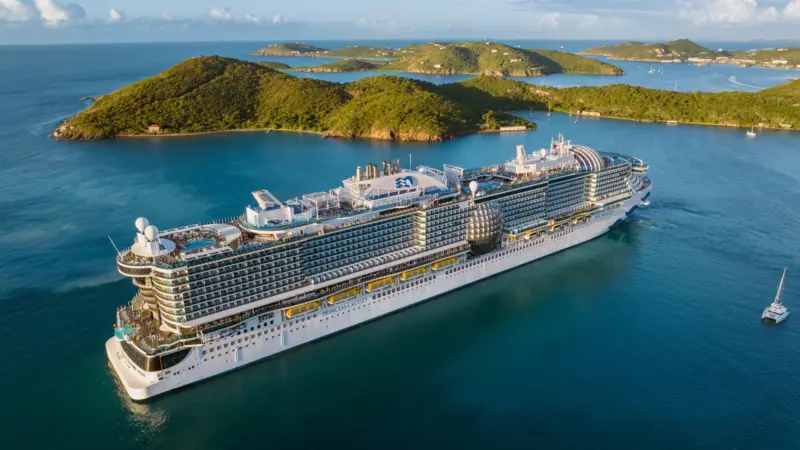
There are a number of progressive ship owners that have already invested in LNG-fuelled newbuilds. We can already see big names like Maersk, Tallink Group, TOTE, Containerships Ltd. and Carnival, representing the cruise ship sector, to name just a few. Led by example of the Norwegian ship-owners whose fleet consists of 53 LNG fuelled ships (LNG World Shipping Report, 2016), other shipowners and bunkering suppliers might re-consider their investment strategies in favour of LNG-fuelled ship and LNG bunkering infrastructure in the near future. Currently there are 106 LNG-fuelled ships being on order, with an ambition to get the global fleet to 1,000 LNG-fuelled ships by 2020.
Clearly much needs to be done to continue to develop the infrastructure and appetite for LNG. By 2020 it obviously won’t be the most widely-used compliance solution of choice, however there is every chance that in the medium to long-term LNG is considered an important part of the marine fuel supply chain.
Adrian Tolson founded 20|20 Marine Energy in late 2015. He was previously managing director of Aegean Oil USA. Prior to that he was general manager of OW Bunker North America.