



UREA GENERATOR OFFERS STORAGE TANK REDUCTION OF OVER 90%
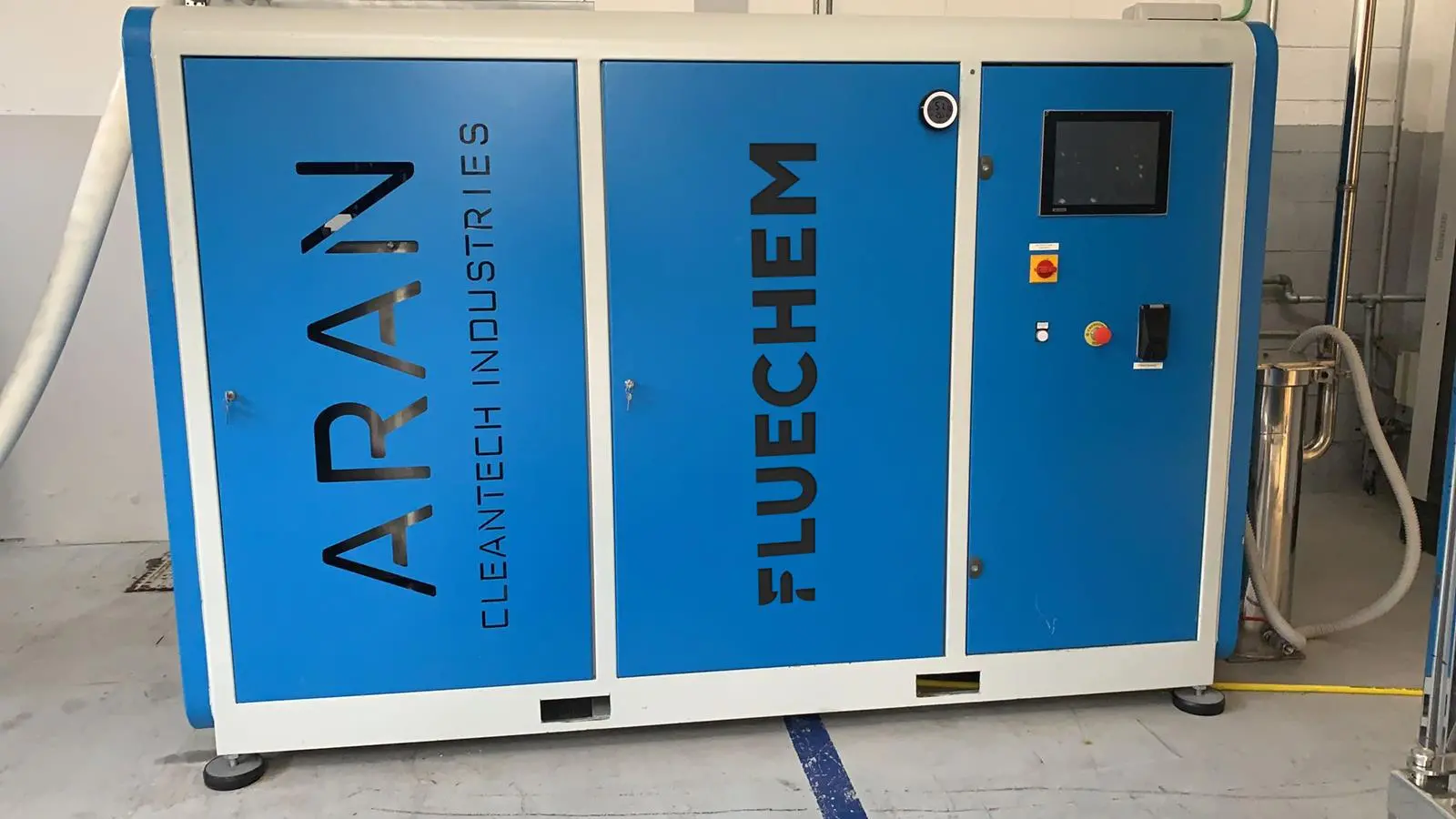
The new system offers an alternative to bunkering the AUS40 solution used by selective catalytic reduction systems to reduce NOx emissions. AUS40 consists of about 60% water, and the new system enables it to be generated on demand, thus potentially reducing the size of storage tanks by over 90%. (A large vessel would typically carry a stock of about 40m3 of AUS40.)
An initial assessment has identified that the onboard urea blending system can deliver a 60% reduction in OPEX costs and 50% reduction in weight and space used on board a vessel. The companies say the system reduces transport fees compared to the current method of supplying urea solutions in port and also reduces the risk of the solution spoiling onboard.
“The system can be fully integrated into a newbuild ship during the construction period or partially integrated into an existing vessel / system (retrofitted) with minimal operational impact,” says Fluechem Director, Niall Roberts. “Furthermore, it can be supplied as an independent standalone containerised unit for maximum flexibility or for shorter periods of service on a leased basis.”
The containerised system is a self-contained urea generator which, when connected to the ships pot water and power supply, enables the users to blend dry urea prills (pellets) to deliver aqueous urea solutions (AUS40) to ISO standards. It is replenished by a semi-automatic urea prill hopper system designed to fit the required consumption parameters. The prills are available in virtually any country, says Fluechem.
One kilogram of urea prills provides 2.26 litres of AUS40. Providing urea prills to a ship, as opposed to the AUS40 solution, reduces the weight of the product to be supplied, which means less transportation resulting in less emissions and less cost from the supply chain, says Roberts. “Reducing the stored amount of AUS40 on a ship reduces the weight onboard, with knock on benefits for fuel consumption and ultimately results in fewer emissions from the ship. The economic and environmental impact of a single unit for a single vessel can be enhanced further when customers select a standard design for a fleet of vessels.”
The environmental and cost savings realised by using a urea generator is a function of the AUS40 volume consumed by the ship and the time and cost of the logistics to supply that volume. “We believe that ships with a predictable AUS40 consumption, for example with trading patterns within or into Emission Control Areas, will be best suited to maximise the savings from fitting a urea generator,” says Roberts. He anticipates that the first urea generator will be installed on an existing ship currently using AUS40 later this year before then moving on to installing a system on a new build vessel.
Related Articles
 EXHAUST GAS CLEANING SYSTEMS
 EXHAUST GAS CLEANING SYSTEMS
 EXHAUST GAS CLEANING SYSTEMS