Wallenius Wilhelmsen bunkers first biofuel in Korea trial
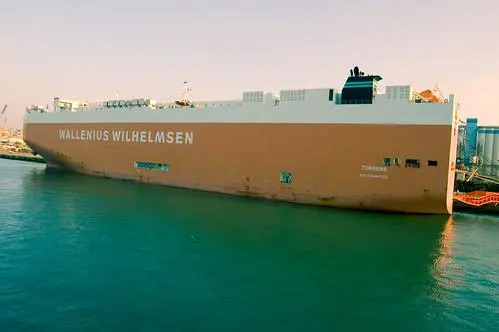
The vessel was bunkered with a biofuel blend supplied by GS Caltex, using an HSFO fuel blended with UCOME (Bio feedstock).
While the drop-in fuel can be used in existing engines without any modification or tank cleaning, very few suppliers currently offer this particular fuel. Despite the GHG emissions reduction potential of the fuel, there is little demand for marine biofuel blending in Korea.
Jang Hongseok, Manager Energy Sourcing, Wallenius Wilhelmsen said, “Despite the growing demand and supply of biofuels around the world, the preparation of biofuels in Korean ports has been somewhat slow. As Korea is one of our major bunkering ports, stable biofuel supply is essential to secure flexibility of tonnage allocation, so I am pleased to have a B30 HSFO trial with GS Caltex, one of Korea’s major fuel suppliers, and I hope close cooperation will continue in the future.”
Cha Hyungmin, Team Leader of GS Caltex Biofuel team mentioned “GS Caltex has paved the way for developing Bio-Marine Fuels in Korea, and we expect this B30 Bio-Marine Fuel (HSFO) trial with Wallenius Wilhelmsen will be a meaningful step for scrubber installed vessels of global shipping companies to reduce their carbon emissions when calling Korean ports. We hope to expand the relationship with Wallenius Wilhelmsen and support as a carbon reduction solution partner in Korea.”
In the meantime, Wallenius Wilhelmsen is currently assessing the viability of both HSFO-Biofuel blends and VLSFO-Biofuel blends in the Asia region as part of its global deep-sea trade decarbonization strategy.
Customers are increasingly looking to reduce their Scope 3 CO2 emissions by utilizing biofuel. In response, Wallenius Wilhelmsen has pioneered a new Reduced Carbon Freight Service and will issue declarations, verified by a third-party accreditor of reduced CO2 emissions to customers who have purchased the new offer.
Customers using the Reduced Carbon Freight Service will typically be able to reduce their Scope 3 CO2/GHG emissions in their supply chains, by approximately 20-25% using B30 Biofuel compared with VLSFO/HSFO on a fuel lifecycle.