Waste heat recovery system operates at lower temperature
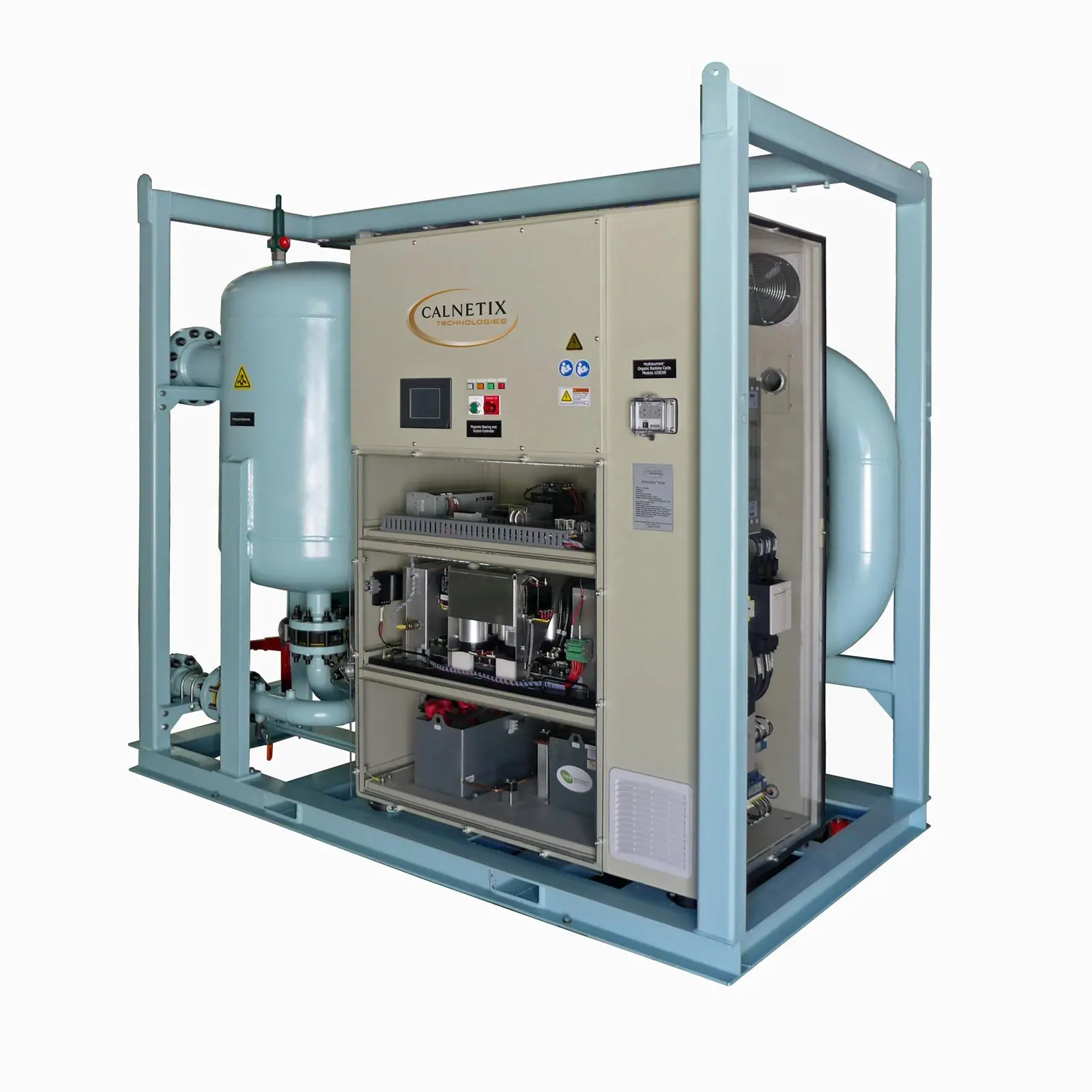
US company Calnetix Technologies focuses on high-speed motor generators and magnetic bearings and control systems. It has applied this technology to its WHR system, said be designed specifically for the shipboard environment, and to produce up to 125kW of power for the ship’s electric load from heat recovered out of the engine’s jacket water. It was launched at the recent SMM show in Hamburg.
The Hydrocurrent system was developed by Calnetix in conjunction with Mitsubishi Heavy Industries Marine Machinery and Engine Company (MHI-MME). It operates using an organic rankine cycle (ORC) heat recovery process. The Hydrocurrent ORC module is a closed-cycle evaporator-condenser phase-change loop, using an organic fluid that has a very low boiling point. The fluid is pumped through an evaporator that pulls heat from the engine’s jacket water. The superheated vapour is expanded across Calnetix’s Thermapower module and an integrated power module developed by Calnetix, known as the Carefree IPM. This process converts the thermal energy into mechanical power, which is then used to produce electric energy, which is fed into the ship’s grid. The warm vapour then flows into a seawater-cooled condenser where it turns back into liquid form. The Carefree IPM consists of a high-speed turbine expander and high-efficiency permanent-magnet generator in a single hermetically sealed housing. According to the company, the friction-free magnetic bearings require no lubrication or maintenance.
Calnetix claims that its system is unique in that it can pull usable heat from a source with temperatures as low as 80°C, unlike other heat recovery systems that require much higher temperatures – typically engine exhaust gas temperatures. The Hydrocurrent system is said to convert excess waste heat into electric power without affecting engine performance, while still leaving sufficient heat in the jacket water to power a fresh water maker.
The system has a small footprint and can be retrofitted in existing ships without making any major modifications to the engines.
“Hydrocurrent pays for itself in a very short time by reducing the load on the ship’s bunker-fuelled generators,” said Vatche Artinian, Calnetix chairman and CEO. “This can translate into fuel savings of up to 200 tons per year.”