When gas isn’t just gas
“People talk about ‘LNG’ but it’s really a mixture of gases,” says Christos Chryssakis of DNV GL, “and there’s large differences depending on where it’s sourced”. While what’s brought onboard in one area could be almost pure methane, in another it could contain up to 13% ethane, 3% propane, 1% butane and maybe a few percent nitrogen he explains.
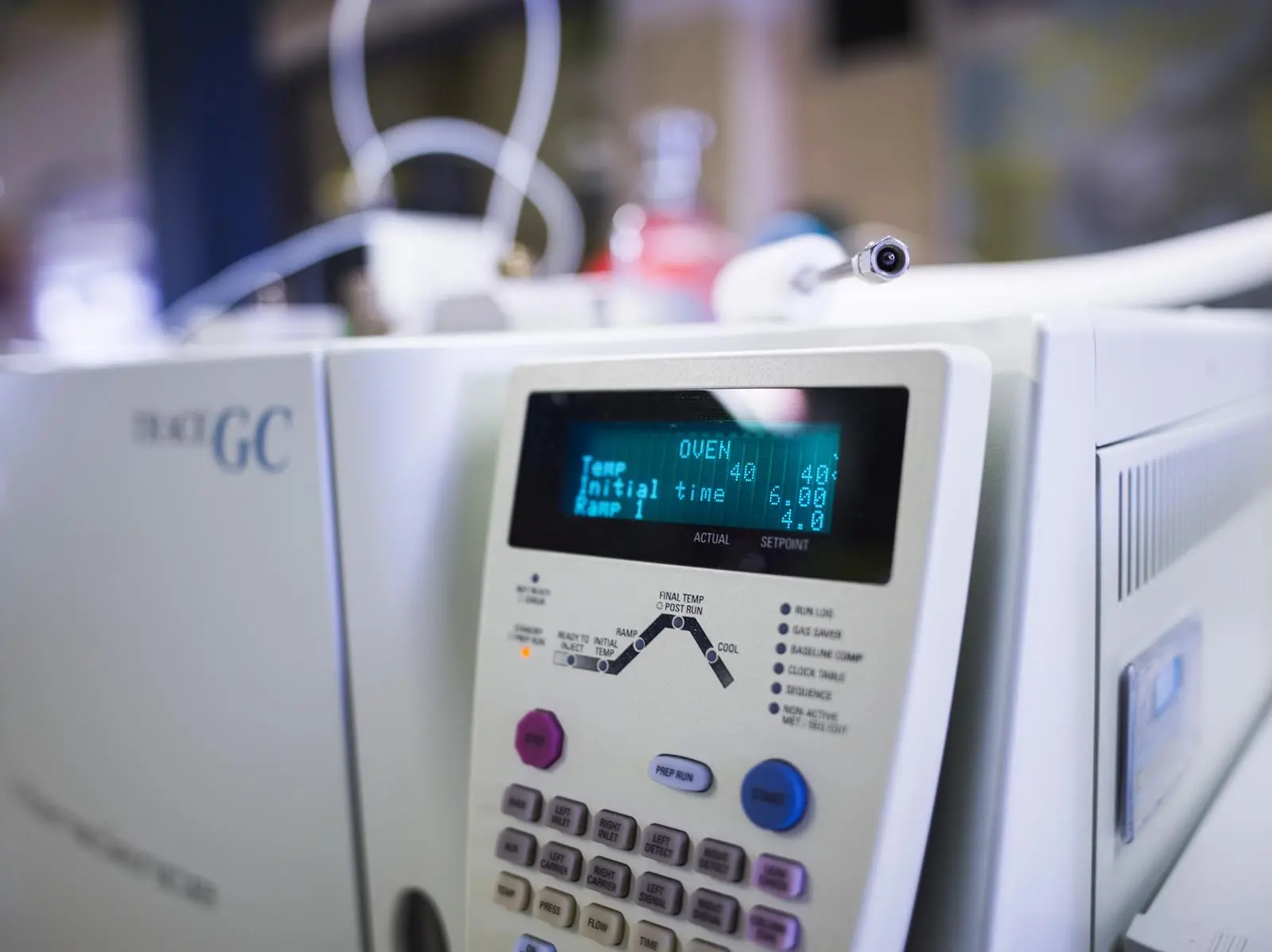
However, regional variation isn’t the only thing playing around with the energy content of the gas; the ‘boil-off’ of a number of elements can significantly alter its composition during a voyage. “We knew the quality of the gas onboard was changing,” says Mr Chryssakis, “but we had no idea by how much” he admits, adding the variation was discovered “almost by chance” when the team installed a gas chromatograph – a separation technique that yields an on-the-spot analysis of volatile compounds – during an energy efficiency research programme.
However, his colleague Sander Gersen adds that this change is “not straightforward” by any means as other gases – as well as methane – will evaporate at different points along the journey. Somewhat surprisingly, this means the quality of the fuel may not be diminished but could be raised over the duration of the voyage. “Nitrogen, for example, needs -196°C to keep liquid, rather lower than LNG’s −163 °C, and thus boils off first,” he says, pointing out that nitrogen is not particularly useful for combustion. Moreover, different types of tank produce widely divergent effects while the conditions en-route will impact sloshing: this too plays a part in the boil-off sequence.
The end result is a product that’s almost constantly changing, explains Mr Gersen, Mr Chryssakis adding these variations are big enough to prompt at least one long-distance carrier to fit chromatographs or other gas sensors to the newest of its fleet: determining quality, not just quantity, of delivery means more appropriate billing.
Even though the calorific value of cargo on delivery is important enough, the impact onboard is proving to be even more of an issue as many carriers have fitted dual-fuel engines to make use of the boil-off gas for propulsion.
Mr Chryssakis recalls: “We saw the engines were only running up to 80% load, but these engines are at their most efficient when the loading is even higher… which is when we started to look at other, power industry applications to see where we could bring in some improvement.”
Mr Gersen explains that one of the most critical issues for these type of engines is spontaneous, early combustion – knocking. This is really down to an uneven ignition, linked to the other, non-methane mixtures in the gas which have different burn characteristics.
“It’s a problem common to spark-ignited gasoline and pilot-fuelled, spark ignited and pre-chamber natural gas engines,” he says, adding that it’s a well known issue in the power generation industry which also has to deal with gas imports of varying quality. “As it’s to be avoided at all costs the result is that manufacturers adjust their engines to the ‘worst-case’ fuel… which means there are large efficiency penalties to be paid.”
Therefore, the hunt has been on for a system that would allow a better, more responsive tuning of the engine to the fuel while still keeping well away from the potential for knock.
However, it has taken some time. He explains a breakthrough needed two elements: one being in sensor technology. Although the classification society was in a very good position to keep an eye on new developments, “until fairly recently there just wasn’t a real time gas sensor available that could do the job” says Mr Gersen. “We kept testing them out in our lab, but only a year or so ago did we find one that could measure propane and butane well.”
The other element was a more reliable way to predict knock resistance of fuels – and this DNV GL has been working on for a while. Current techniques suffer from a number of shortcomings he explains: the common methane-number methods are derived from data using a stoichiometric engine from the 60s, “but today things are different, for example modern engines tend to operate fuel-lean for a substantial amount of the time”. Therefore a lot of hard work has gone into a combustion algorithm that more accurately maps knocking against different fuel qualities. “It’s a very sharp tool,” says Mr Gersen.
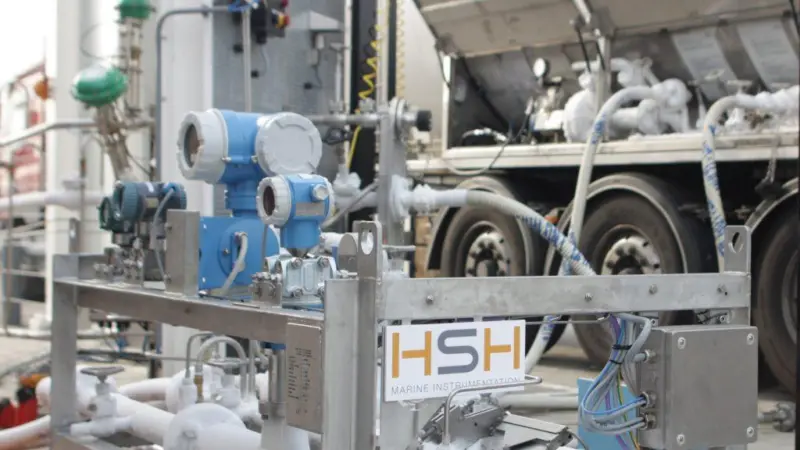
Put all this together with a fast-response gas composition sensor which can sample the fuel line, and the result is “near real-time responsiveness to what’s going into the engine” says Mr Chryssakis. And this, according to both researchers, could lead to up to 6% fuel saving as the engines could be loaded much more efficiently – and it also gives the operator the flexibility to shut off one engine entirely allowing the others to do the job, reducing running hours and maintenance.
While Mr Chryssakis admits that onboard operation wouldn’t necessarily sway the ‘composition sensor’ installation argument alone as each one costs something like 15,000Eur, he’s clear it becomes a no-brainer if it’s combined with cargo delivery quality.
But – and here’s the rub – it will take a forward-thinking owner and engine manufacturer to get together with the researchers in order to try it out, although “it could make LNG an even more attractive transportation fuel” he concludes.