Woodward SOGAV gas admission valve awarded IGF Code compliance
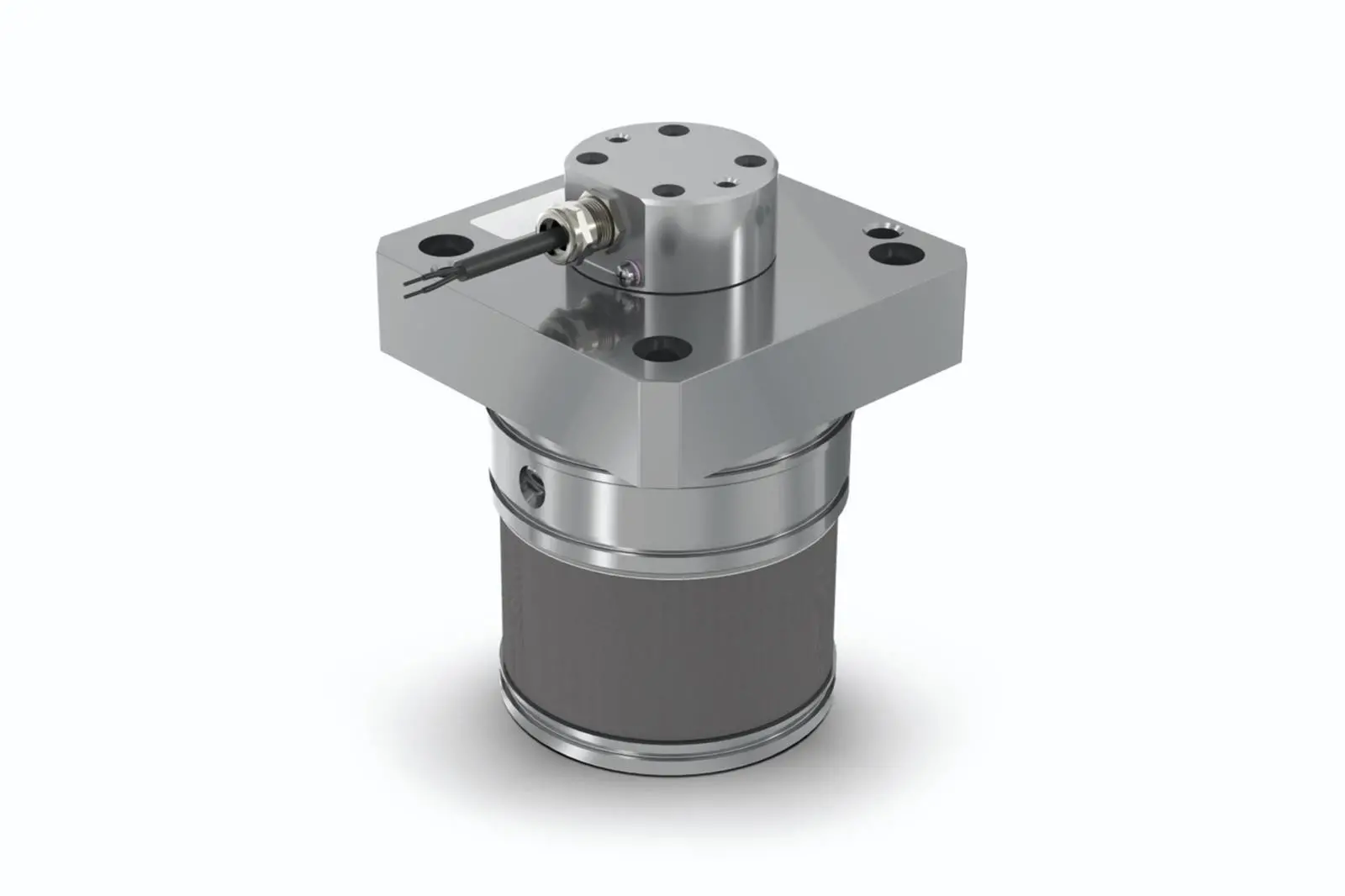
The SOGAV235 gas admission valve has been developed by Woodward’s technical experts in Colorado, USA.
Rick Boom, Director Product Management, Large Engine Systems at Woodward, says: “We are delighted that the performance and technical capability of the SOGAV235 gas admission valve for marine engines has achieved IGF Code compliance. Our valve technology supports the increasing need across the maritime industry for the use of proven and safe engine valve technology – adding even greater performance and confidence to our customers operational needs. It delivers complete peace of mind for engine manufacturers and vessel operators.”
Boom previously discussed why achieving Zone ‘0’ IGF Code compliance posed a series of interlinked technical and regulatory challenges in a 2021 interview with The Motorship.
Speaking today, the company notes that the new SOGAV235 is an ideal solution for marine engines and equipment using gas or low-flashpoint liquids as fuel in potentially dangerous explosive and flammable atmospheres.
“Our technical experts focused their time on engineering an advanced gas admission valve with the right level of technical operating standards to meet the IGF performance code. SOGAV235 is certified to the highest explosion proof standards having been exposed to extensive pre-qualification, qualification and testing in severe environments,” says Boom. “We are already experiencing an uplift in OEM interest on how to adopt and switch to our IGF Code compliant valves.”
Performance and characteristics of a gas and dual-fuel internal combustion engine are significantly influenced by gas admission valves. Woodward’s SOGAV valves are a family of electrically actuated, high-response gas admission valves for in-manifold (port) fuel admission. They are designed for use on four-cycle, turbocharged, natural gas or dual-fuel engines, including marine LNG fuel.
Once fitted into a vessel’s gaseous fuel admission system, SOGAV delivers precise gas mass flow-metering per cylinder ranging from 70kw/cyl to 1500kw/cyl. This enables gas engines and dual-fuel engines to operate with lean burn – delivering increased efficiency and reduced emissions. Only one SOGAV valve is required for each engine cylinder.
“We’ve also introduced a new diagnostic element to how we control our SOGAV valves,” highlights Boom. “It allows an accurate prediction of the remaining time before the valve has to be replaced. While SOGAVs are built for a typical 16,000-24,000 hour life, it’s very useful for the operator to know if the valves are in good condition and safe to operate for the next 5,000 hours.”
Woodward is continuing its innovation focus by further developing its valve technology to operate with future e-fuel technologies such as ammonia, hydrogen and in post-2030 engine specifications, to better support the maritime and shipping industry on their journey toward zero emissions and safety in vessel operations.
The latest IGF Code compliance for the Woodward’s SOGAV235 gas admission valve comes on the back of the company’s recent approval listing for the SOGAV105/145 valve that received an IGF Zone ‘0’ listing.