



Cyber Security Audits Need To Cover BWMS: BIO-UV
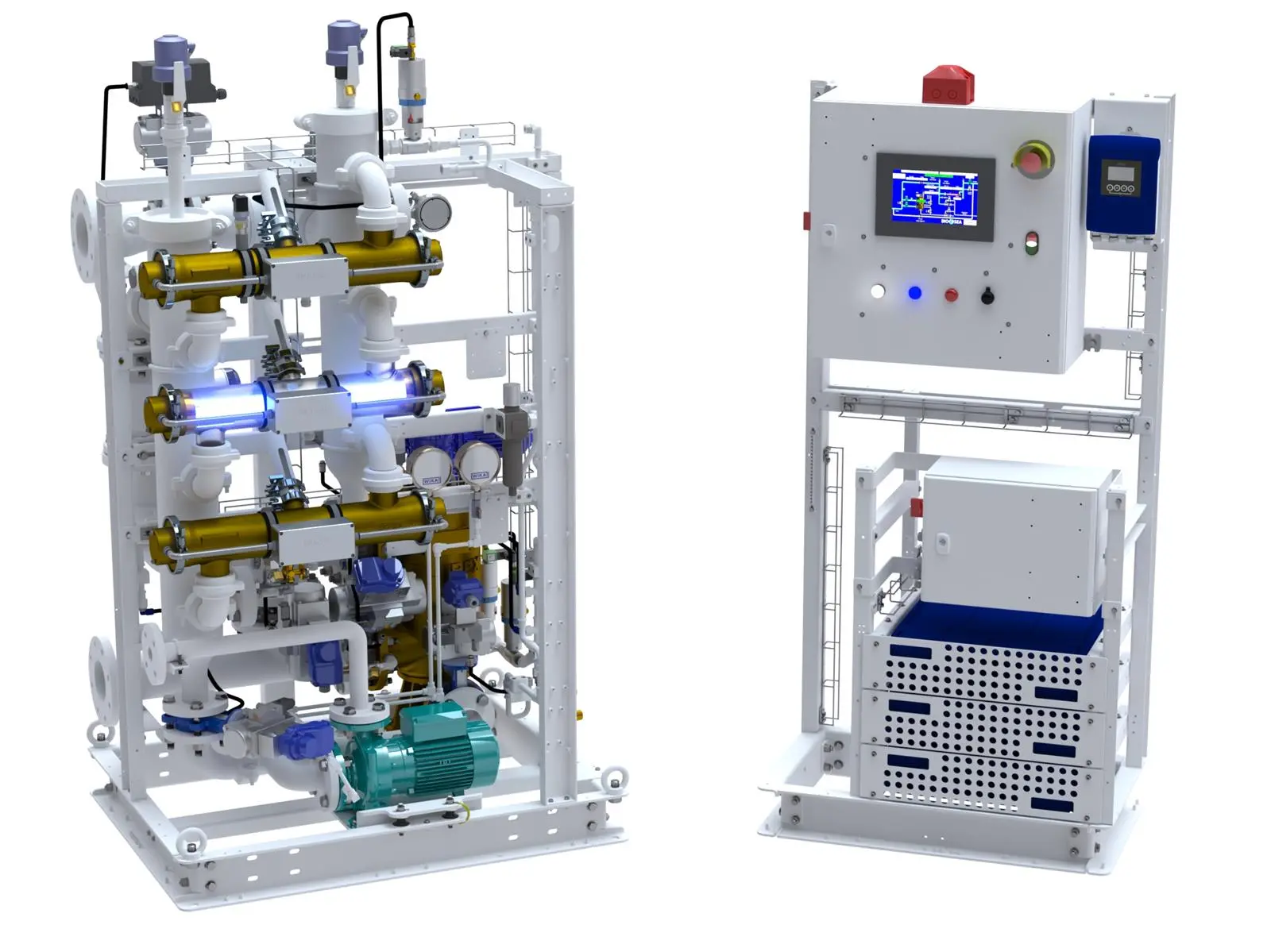
These projects are much more than simple equipment acquisition, though this of course is a fundamental consideration. But equally as important, in my view, is integrating the system within an existing ship. This, together with a vessel’s likely operating profile, should drive decisions on the choice of technology.
As the market has grown in maturity, it has weeded out the technologies of choice. And today, the vast majority of systems operate on the basis of ultra-violet (UV) treatment combined with filtration, such as our BIO-SEA system, or electro-chlorination. There are other technologies, of course, but they tend to be suited for specific vessel and operational requirements.
However, the backdrop is far more complicated than this because even systems based on the same treatment technology vary significantly in terms of efficacy. Waters of high turbidity such as those found off parts of the Chinese coast, for example, are challenging for UV systems. That is why our BIO-SEA system is a carefully designed combination of UV disinfection and filtration.
In our arena, there are two clear groups of UV system manufacturers – one in Europe and one in Asia – whose systems provide different levels of efficiency. Careful analysis of system performance – level of UV dose and holding time, for example – is therefore essential.
Cyber security requirements
I want to draw owners and operators attention to the looming requirements of cyber security.
The operating software used by ballast water treatment systems poses a threat to a vessel’s cyber security, as it represents a point of entry for the cyber hacker. If the ballasting system is accessed by criminals there is a significant risk to ship stability, crew safety and the environment. We recommend in the strongest terms that owners ensure that the ballast water treatment system’s control software is suffi ciently protected against cyber-attack.
This has a number of implications for BWMS systems. It is important to bear in mind that there are a huge number of systems installed some time ago, well before some of the latest advances in cyber security were made available. Most of these legacy systems are probably not suitable for security upgrades and could be attractive targets for criminals.
As many of you know, the International Association of Classification Societies (IACS) has recently published two unified requirements relating to the cyber resilience of ships and their equipment. And we are following these and making sure that they will be implemented on system installations from 2024. We have recently completed testing new BIO-SEA cyber secure control software for to ensure that our cyber framework offers the right level of security and hope to have full class approval in 2023.
At BIO-UV Group, we have our own internal engineering personnel who specialise in the correct dosing levels, for example. So, we don’t have to rely on external engineering or development teams. This means that we can bring to bear knowledge gained from water treatment system installations in other challenging industrial sectors.
The differences between systems have important implications for ship operators. One, it is important to pick a ballast water system that can be integrated effectively with a ship’s likely trading pattern. If the vessel is to trade in Asian waters much of the time, robust filtration and UV dosing is an important factor. A second aspect of this point is whether a ship’s operating profile can be adjusted – to enable ballast hauls between two ports where water conditions are challenging, for example.
We have seen a number of owners opting not to install treatment systems because their ships operate consistently in the same region. But in our experience, this is a short sighted strategy because the absence of an effective system has a significant impact on vessel value and can also be a constraint on vessel deployment. Furthermore, the cost of retrofit can be significantly less than the reduction in a vessel’s value resulting from not having a ballast water installed. This is because of constraints on future employment possibilities.
Therefore, we see that having an effective system installation is a significant priority for buyers. This is clearly evident in the offshore market (OSVs and PSVs, in particular) and is likely to underpin a buoyant retrofit market lasting well past September 2024.
It should also provide guidance for those who claim that there is no return on investment for system installations. It is true that having a system does not increase revenue generating capability. But the converse is also true – not having one could result in the loss of a charter contract or a discount in vessel value. In other words, there is a price attached to not having a robust system on board.
Another key aspect which we believe is sometimes overlooked is the need for ship operators to account for ongoing system service and maintenance and, critically, crew training. We are moving from a market in which it was important to have a system installed on board, to one in which it is essential to demonstrate that the system operates effectively and is properly managed by the seagoing staff onboard.
We believe that shipowners should rely on support from system manufacturers in terms of training and annual system checks. Although such checks are not required by the IMO, they are mandatory under US regulations and should definitely be included in a robust maintenance schedule.
We have found, in practice, that seafarers who need to familiarise themselves with certain types of systems can be supported at the same time as the annual check. They may well be familiar with generic systems, but not with the requirements relating to specific installations.
At BIO-SEA, we use a network of Certified Service Partners around the world to ensure that our clients have access to the best service and support in any location. This approach also safeguards the validity of our OEM original warranty. We also strongly recommend that ship operators should keep a stock of spare parts on board. Although this is not a class requirement, why would you not keep spares for a ballast water system in the same way as you would for any other critical system on board?
Related Articles
 BALLAST WATER MANAGEMENT
 BALLAST WATER MANAGEMENT
 BALLAST WATER MANAGEMENT