



Ballast treatment deadlines loom for IMO and US standards
More than a year after they had been submitted to IMO, amendments to the Ballast Water Management Convention (BWMC) requiring commissioning testing for ballast water management systems (BWMSs) have been adopted.
Meeting remotely in November – more than seven months later than scheduled – delegates at the 75th Marine Environment Protection Committee (MEPC 75) adopted amendments that had already been approved at MEPC 74 in May 2019. Under IMO’s tacit acceptance process, parties to the convention have until 1 December 2021 to object to the amendments and, unless more than a third of them do so, it will enter into force on 1 June 2022.
However, the resolution invites parties “to consider the application of the amendments to regulation E-1 with regard to commissioning testing as soon as possible to ships entitled to fly their flag,” and, in a summary of MEPC 75’s outcomes, class society DNV GL advised that “some flag administrations are requiring commissioning testing ahead of the BWMC amendments entering into force.”
It does not name them, but a white paper published by BWMS maker Alfa Laval in March this year listed Australia, The Bahamas, Cyprus, Panama and Singapore as early adopters and it expected others to follow.
Once it is in force, an initial survey will be required before a ship receives its International Ballast water management certificate to confirm that a commissioning test has been conducted “to validate the installation of any ballast water management system to demonstrate that its mechanical, physical, chemical and biological processes are working properly.”
Although the amendment’s text does not specify the form that this test should take, MEPC 75 also approved revised guidance for commissioning testing that had been developed by the seventh meeting of the Sub-Committee on Pollution Prevention and Response (PPR 7) in February this year and issued as BWM.2/Circ.42/Rev.2.
Those guidelines say that “a sample may be collected during ballast water uptake to characterise the ambient water, by any means practical” and that at least 1m3 must be analysed and the test is successful if the “indicative analysis” indicates that the discharge samples meet the D-2 standard.
For shipowners operating into the US, the potential impact of the US Vessel Incidental Discharge Act (VIDA) should be high on their agenda. It was signed into law on 4 December 2018, just two weeks before the 2013 Vessel General Permit (VGP) was due to expire.
For the moment, the VGP remains in force but VIDA requires the US Environmental Protection Agency (EPA) to develop national standards of performance similar to those covered by the VGP by 4 December 2020.
Yet the EPA only issued its proposed rules on 6 October and opened them for public comment on 26 October, with a response deadline of 25 November. As that deadline passed, the EPA’s website declared that it was “working as expeditiously as possible” to meet its deadline. The USCG will then have two years to develop corresponding implementation, compliance, and enforcement regulations.
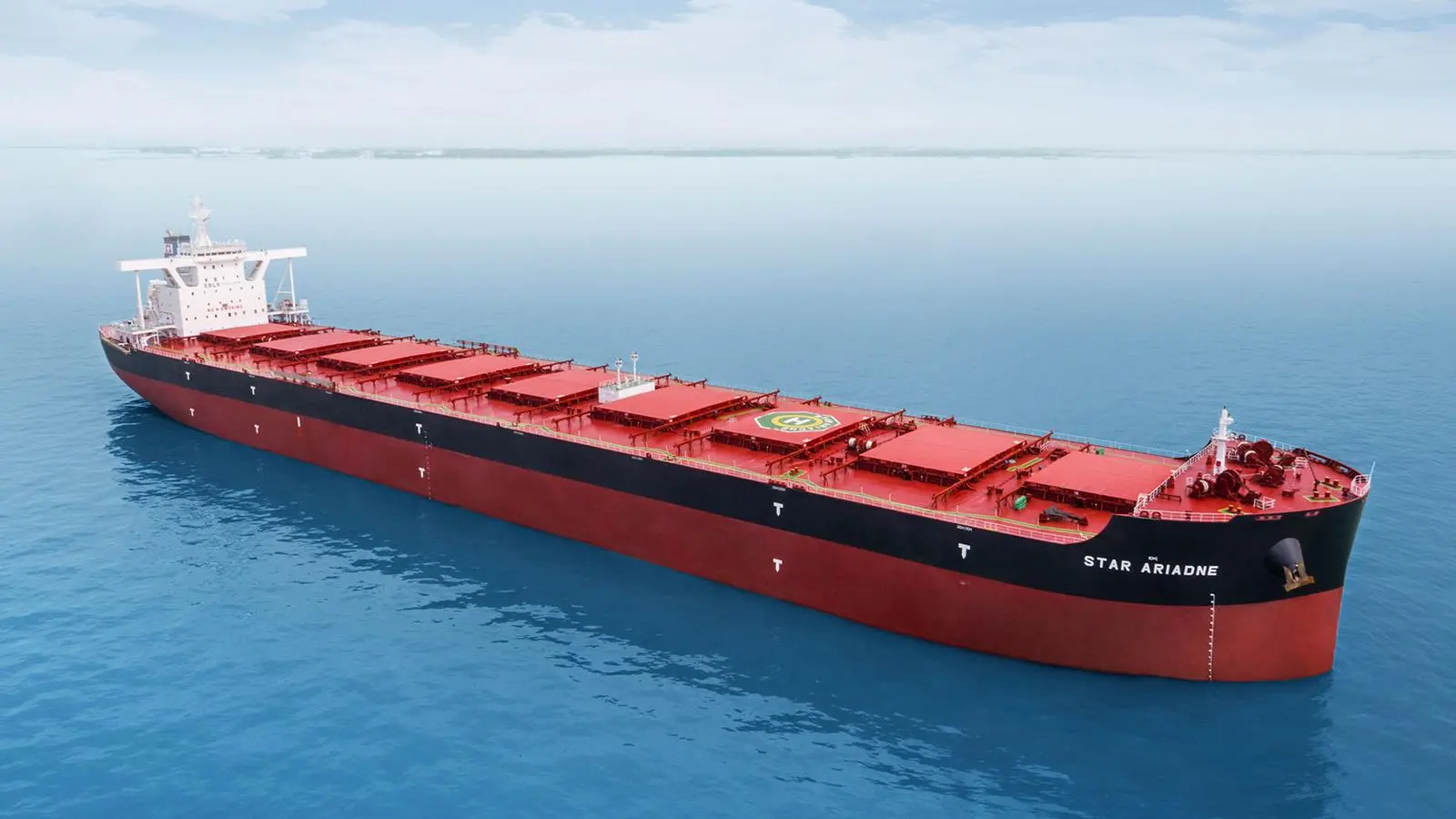
This is already causing concern among shipowners. In late March, for example, Star Bulk told shareholders in its annual report that “the new regulations could require the installation of new equipment, which may cause us to incur substantial costs.”
Shortly before MEPC 75, another important ballast treatment deadline passed: since 28 October, new BWMS installations on ships that will trade outside of US waters must fit systems that have been type-approved to IMO’s revised G8 standard, which brings IMO’s requirements closer to those of the USCG. Existing installations are not affected by this change.
A critical detail is the definition of ‘installation date’ and in May this year Lloyd’s Register issued notes on its website that clarified it as referring to “the contractual date of delivery of the BWTS/BWMS to the ship” or “the actual date of delivery of the BWTS/BWMS to the ship.”
Because of the global COVID-19 pandemic, yard schedules have been disrupted for many projects and LR drew attention to IMO’s circular letter 4204/Add.7, which was issued in April and offers guidance about the effect of unforeseen delays in ship deliveries. Although it does not specifically refer to BWMS installations, it is worth noting its advice that “if a ship’s delivery date occurs on or after the delivery date specified for a particular set of regulation amendments” those amendments will apply unless the administration has accepted that the delay was “due to unforeseen circumstances beyond the control of the shipbuilder and the owner.”
The USCG also issued guidance in April, specific to BWMS installations. Its Marine Safety Information Bulletin MSIB 14-20 details installation date extensions for vessels with compliance dates before 1 April 2021 that have been impacted by the pandemic.
Related Articles
 BALLAST WATER MANAGEMENT
 BALLAST WATER MANAGEMENT
 BALLAST WATER MANAGEMENT