



BAWAT eyes USCG type approval in H2 2019
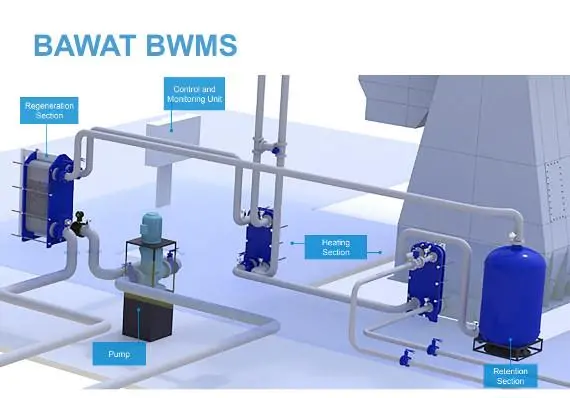
BAWAT’s system has now passed all USCG land based tests and has only one shipboard test left to complete. This is scheduled for April in the ‘difficult’ waters (high organism levels) of Port Klang, Malaysia and the Mekong River estuary, Vietnam.
BAWAT CEO Kim Diederichsen said “a wake up call” is on its way, for both the segment and the broader shipping industry. He commented: “All of the tests so far – onboard and onshore – have demonstrated rock solid results. By that I mean, not near the threshold of compliance, but total efficacy.”
Simple benefits
BAWAT’s system is physically based and works simply by heating ballast water, using waste heat produced by a vessel’s engine (giving it low OPEX and ensuring green credentials).
The process works from as low as 64 degrees centigrade and there is zero post treatment holding time. With a one-pass solution the treatment can be undertaken during a vessel’s voyage, leaving crews to focus on more essential tasks in ports (such as cargo handling and bunkering). As such it optimizes man-hour, as well as energy, efficiency.
“It really is that simple,” Diederichsen stresses. “We’ve been through the development phase, are sailing through testing and are now commercialising this revolutionary product. We’ve already signed a series of fleet agreements and have been shortlisted for many more. The shipowners we’re talking to are seeing this as a wake-up call – ballast water compliance doesn’t have to be so difficult!
“With vessels now mandated to install ballast systems we believe we’ve timed this just right. The years to come will be very busy times for retrofitting, especially in 2021/22, and we have the system and organisation ready and raring to go.”
The current USCG testing is being carried out onboard a 38,000 DWT container vessel, with DHI Denmark and Lloyds Register onboard as partners.
Related Articles
 BALLAST WATER MANAGEMENT
 BALLAST WATER MANAGEMENT
 BALLAST WATER MANAGEMENT