



Safety report digest identifies risks of good intentions
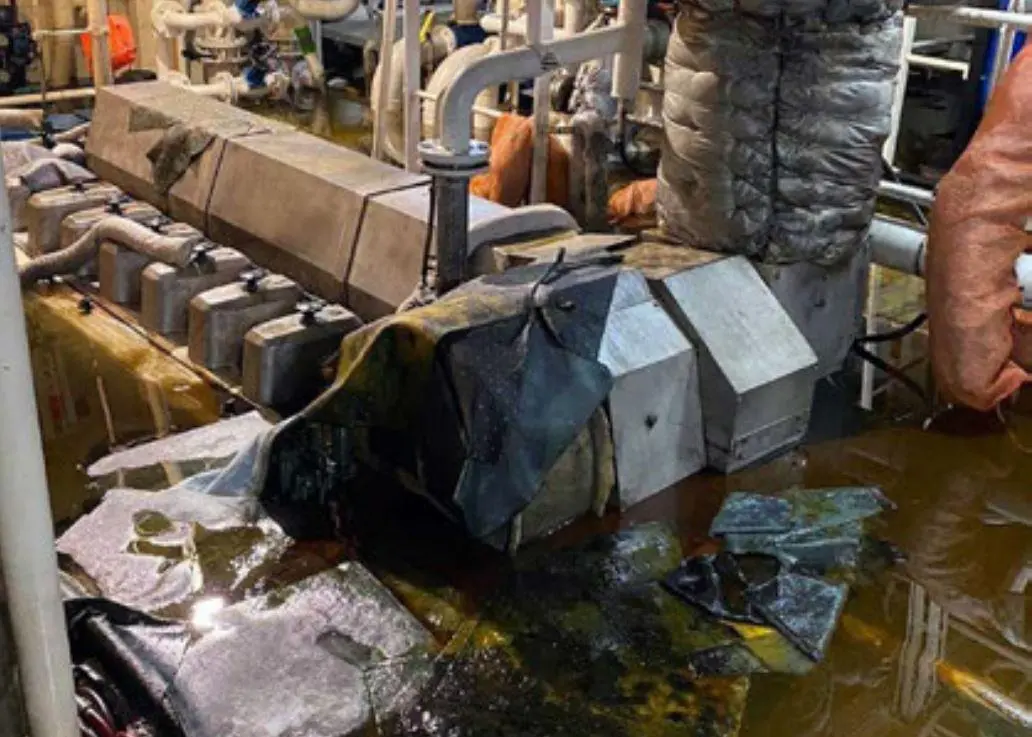
Among the first cases cited in the report related to the consequences of a defective butterfly hull valve in a vessel’s ballast water treatment system.
Engineers planned to clean their ship’s ballast water management system’s seawater strainer as ballasting operations were taking longer than normal. They shut the automatic butterfly hull valve between the hull inlet and the strainer and then manually shut the isolation valve between the strainer and the pump.
They were unable to loosen the strainer lid and eventually rigged a chain block. This resulted in the lid flying off and seawater flooding into the engine room. The engineers tried unsuccessfully to replace the lid and then evacuated. The water level rose over the bottom plates until the seawater pressure equalised.
The vessel was subsequently made watertight after a diver fitted an external patch over the hull valve. The contaminated water was then pumped out to road tankers for disposal and the vessel was dry docked for repairs.
A technical investigation identified that the automatic butterfly hull valve was defective and had remained partially open when indicated as shut on the ballast control panel. The strainer was clean, and the slow ballasting operations were caused by a defective pump.
Catastrophic engine failure
Another accident described in the Safety Digest related to the main engines of a ro-ro. The vessel was regularly maintained by an engineering contractor approved to work on the large diesel main engines.
Although the contractor had access to most of the engine manufacturer’s maintenance instructions, they did not have detailed information on the engine connecting rod bearings. The engine manufacturer advised that replacement work should be undertaken at one of their specialist centres due to the difficult machining and reinstallation process. This involved cutting the bearing shell axially to a fine tolerance to enable it to collapse and then using liquid nitrogen to contract the new shell for installation in the housing.
The contractor had undertaken similar work on other manufacturers’ engines and removed the bearing shell with a disc cutter. They then used a gas cutting torch to heat up the bearing housing to slide the shell into position.
This resulted in introduced notches and heat marks in the bearing housing which, some months later led to catastrophic failure of the engine. Major internal engine components were thrown out through the crankcase and the engine room was engulfed in fire.
The Safety Digest is available here.
Related Articles
 BALLAST WATER MANAGEMENT
 BALLAST WATER MANAGEMENT
 BALLAST WATER MANAGEMENT